

Dark mode

ASEAN Future Forum shapes changing world priorities
At a time of intensifying geopolitical competition and growing global uncertainty, the ASEAN Future Forum 2026 is being regarded by international participants as an important platform for shaping the region's future direction. This year's theme, "Peace, Prosperity and People-Centred Development", is seen as capturing ASEAN's determination to strengthen unity, preserve stability and pursue more inclusive growth amid a rapidly evolving international landscape.
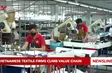
Vietnamese textile firms climb value chain
Economy 03:25Higher expectations for better design, advanced technology, traceability and sustainable production are pushing Vietnamese textile and garment businesses into a new phase. Rather than simply expanding production, firms are now working to strengthen their position in global value chains.
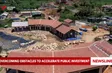
Overcoming obstacles to accelerate public investment
Economy 03:10Quảng Ninh Province is now leading the country in public investment disbursement, with more than 212.7 million US dollars disbursed as of June 2026, exceeding 25% of the Government-assigned target. In the mountainous commune of Bình Liêu, infrastructure projects are gaining momentum thanks to strong public support and proactive local authorities.
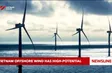
Việt Nam offshore wind has high-potential
Economy 00:51According to the Global Wind Energy Council's latest report, Việt Nam has the potential to become the fifth-largest offshore wind market in the Asia-Pacific region between 2031 and 2035. The report projects around 7 gigawatts of new offshore wind capacity to be installed between 2031 and 2035, in line with targets set under the revised Power Development Plan 8.
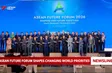
ASEAN Future Forum shapes changing world priorities
Economy 02:55At a time of intensifying geopolitical competition and growing global uncertainty, the ASEAN Future Forum 2026 is being regarded by international participants as an important platform for shaping the region's future direction. This year's theme, "Peace, Prosperity and People-Centred Development", is seen as capturing ASEAN's determination to strengthen unity, preserve stability and pursue more inclusive growth amid a rapidly evolving international landscape.
Capital needed to power Việt Nam's strategic industries
Economy 07:18Việt Nam is pursuing growth on multiple fronts, from expanding industries to improving public services and safeguarding people's interests while setting its eye towards the distant future. The challenge now is how to mobilise the long-term capital needed to help these industries scale up and succeed.

ECB raises interest rates due to inflation pressure
Economy 01:57The European Central Bank has just decided to raise interest rates for the first time in nearly three years, amidst the war in Iran, which has caused a sharp increase in energy prices and pushed inflation in the eurozone higher. This marks a notable reversal in European monetary policy, shifting from easing to tightening.
Contact us
+(84)24.6327.1999 | Fax: +(84)24.3771.8838
vietnamtoday@vtv.vn
43 Nguyen Chi Thanh Street, Giang Vo, Hanoi, Vietnam
About us
Connect with us


