

Dark mode

Việt Nam: key destination for long-term global investment
Việt Nam is emerging as one of Southeast Asia’s most attractive investment destinations, according to a new report just released by the Milken Institute. The Global Opportunity Index is the Institute’s annual report evaluating countries’ attractiveness to investors.
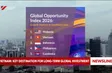
Việt Nam: key destination for long-term global investment
Economy 02:38Việt Nam is emerging as one of Southeast Asia’s most attractive investment destinations, according to a new report just released by the Milken Institute. The Global Opportunity Index is the Institute’s annual report evaluating countries’ attractiveness to investors.

Asia struggles with material shortage
Economy 06:50Currently, organisations across Asia are struggling with shortages in materials. The pressures are hitting hard as the region is reliant on the Middle East for its energy and raw materials. From store shelves to household kitchens, the crisis is now reaching the most ordinary corners of daily life.
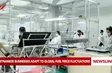
Vietnamese businesses adapt to global fuel price fluctuations
Economy 02:46Amid persistent fluctuations in global fuel prices driven by the conflict in the Middle East, many Vietnamese companies in the logistics and import-export sectors are being forced into a phase of “re-adaptation.” Rather than waiting for the market to stabilise, these businesses are proactively seeking solutions to maintain transport operations. In the current context, adaptation is no longer a choice but a necessity for survival.
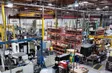
U.S. business delegation visits Việt Nam to boost investment
Economy 02:00Việt Nam continues to rise on the global business radar as the U.S.- ASEAN Business Council leads a delegation of more than 120 members from 52 top U.S. corporations to explore investment opportunities across key sectors. The strong turnout highlights growing confidence in Việt Nam as a strategic hub for long-term trade, innovation, and partnership.
Việt Nam sets growth blueprint to 2030
Economy 07:04Việt Nam’s economy is entering a decisive transition phase. In early April, the Party Central Committee issued Conclusion 18, setting the direction for the 2026–2030 period. The message is clear: growth moves beyond expansion, toward removing obstacles and making the system work more effectively. The pressures are already building from global volatility to rising costs. Let's hear more from Mr Matthew Lourey, Chair of Alitium
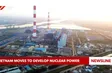
Việt Nam moves to develop nuclear power
Economy 06:40Amid growing global energy uncertainty and rising electricity demand, nuclear power is emerging as a key consideration for many countries. According to estimates, a 10 percent increase in GDP would require electricity output to rise by 15 percent, and with the development of data centers to support digital transformation, power demand could increase by as much as 20 percent.
Contact us
+(84)24.6327.1999 | Fax: +(84)24.3771.8838
vietnamtoday@vtv.vn
43 Nguyen Chi Thanh Street, Giang Vo, Hanoi, Vietnam
About us
Connect with us


