

Dark mode

Viet Nam boosts practical STEM education
Viet Nam has introduced its first dedicated regulation on STEM education in general schools, integrating science, technology, engineering and mathematics through practical, problem-solving activities. With Circular 86 providing a framework for cooperation between schools, universities and businesses, how are these partnerships bringing STEM learning into the classroom?
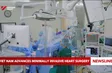
Viet Nam advances minimally invasive heart surgery
Society 02:10Ha Noi Heart Hospital has performed a fully endoscopic procedure to replace two heart valves simultaneously, with the assistance of 3D technology. The operation marks a new advance in Viet Nam’s cardiac surgery capabilities and is among the first of its kind in Southeast Asia.

Hoi An adapts to tourism's low season
Society 01:53Images of quiet streets in Hoi An's ancient town have drawn attention on social media. As tourism enters a quieter period, local authorities and businesses are looking for ways to attract visitors and sustain activity in the heritage town.

Lao Cai drives agricultural transformation
Society 02:52In the first six months of 2026, Lao Cai's agriculture, forestry and fisheries sector recorded estimated growth of 5.19 per cent, ranking fourth nationwide. Behind this performance is the province's shift from traditional agricultural production towards an agricultural economy driven by science and technology, with a focus on increasing the value of local produce.

Viet Nam supports families to boost birth rates
Society 03:13In 2025, Viet Nam's total fertility rate fell to 1.93 children per woman, below the replacement level of 2.1. As the new Population Law introduces greater choice and support for families, the question is whether these measures can help parents feel ready to have more children.
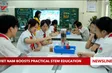
Viet Nam boosts practical STEM education
Society 03:02Viet Nam has introduced its first dedicated regulation on STEM education in general schools, integrating science, technology, engineering and mathematics through practical, problem-solving activities. With Circular 86 providing a framework for cooperation between schools, universities and businesses, how are these partnerships bringing STEM learning into the classroom?

Ho Chi Minh City offers incentives to attract talent
Society 00:52Ho Chi Minh City has proposed an initial support package of US$20,400 per person to attract talent under a draft policy to recruit, retain and develop highly skilled workers. Skilled professionals in key sectors such as artificial intelligence, semiconductors, digital technology, and healthcare can expect to earn monthly incomes of US$4,100 to US$10,200.
Contact us
+(84)24.6327.1999 | Fax: +(84)24.3771.8838
vietnamtoday@vtv.vn
43 Nguyen Chi Thanh Street, Giang Vo, Hanoi, Vietnam
About us
Connect with us


