

Dark mode

Cambodia trade grows on RCEP boost
Cambodia’s trade has grown strongly thanks to the Regional Comprehensive Economic Partnership (RCEP). In the first quarter of 2026, trade with RCEP members reached over 11.26 billion US dollars, up 18.5 percent year-on-year and making up more than 60 percent of total trade. Key partners include China, Việt Nam, Singapore, Japan and South Korea, with imports rising faster than exports due to higher demand for production inputs.

European Central Bank holds rates after hike debate
Economy 02:10One day after the US Federal Reserve decided to keep interest rates unchanged, the European Central Bank has followed suit. The move suggests that major central banks are becoming more cautious, as inflation is not yet fully under control and risks from rising energy prices are re-emerging.

Japan PM highlights FOIP, semiconductor cooperation
Economy 02:25Bilateral and multilateral cooperation, particularly the Free and Open Indo-Pacific (FOIP) strategy, was a key highlight in the speech delivered by Japanese Prime Minister Takaichi Sanae at Việt Nam National University on the afternoon of 2 May.

China revises stock trading rules
Economy 01:59China’s three major stock exchanges have announced revised trading rules to improve market flexibility, ensure stable operations, and better meet investor demand. The new measures mark a key step in reforming the China A-share market (shares of mainland Chinese companies listed on the Shanghai and Shenzhen stock exchanges), bringing it closer to practices in developed markets.

Infrastructure fuels real estate FDI
Economy 06:16Việt Nam's real estate landscape is undergoing a significant transformation, driven by a sharp rise in foreign direct investment. At the same time, major infrastructure developments are increasingly shaping how and where investors allocate capital across the country.
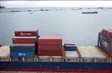
Cambodia trade grows on RCEP boost
Economy 00:35Cambodia’s trade has grown strongly thanks to the Regional Comprehensive Economic Partnership (RCEP). In the first quarter of 2026, trade with RCEP members reached over 11.26 billion US dollars, up 18.5 percent year-on-year and making up more than 60 percent of total trade. Key partners include China, Việt Nam, Singapore, Japan and South Korea, with imports rising faster than exports due to higher demand for production inputs.

Businesses adapt to EU customs reforms
Economy 02:58The European Union is accelerating reforms of its Customs system, moving toward greater digitalisation, transparency, and tighter control of supply chains. These changes are affecting not only large corporations but also reaching small businesses and individual shops across the supply chain. In this shifting landscape, the Vietnamese community in Europe is compelled to adapt quickly, and many are choosing to take a proactive lead.
Contact us
+(84)24.6327.1999 | Fax: +(84)24.3771.8838
vietnamtoday@vtv.vn
43 Nguyen Chi Thanh Street, Giang Vo, Hanoi, Vietnam
About us
Connect with us


