

Dark mode

Global Insight
Global Insight
A weekly round-up featuring analysis and commentary on major global and regional issues. This programme goes beyond the headlines to explain the connections between events, identify emerging trends, and forecast long-term impacts.
Latest Episodes
World Economic Outlook 2026: Navigating a shock-prone world | Global Insight
Politics & Economy 11:47The global economy faces a delicate balancing act: rising energy prices and geopolitical tensions are squeezing households and slowing growth, while the AI boom opens new opportunities. In this edition of "Global Insight", we explore the IMF’s latest World Economic Outlook, the pressures reshaping Asia’s growth, and how economies can build resilience while harnessing AI’s potential.

21st Century Battlefield | Global Insight
Politics & Economy 16:54In this edition of Global Insight, we explore what security means in an era where threats can emerge far beyond the battlefield, and whether countries are prepared for a new age of conflict with no clear front lines.

Sea level rise: Science, uncertainty, and adaptation | Global Insight
Politics & Economy 15:52From flooded streets in the Pacific to sinking deltas across Asia. Sea levels are rising, and the pace is accelerating. Scientists warn that choices made this decade will shape coastlines for centuries. This week on Global Insight, we ask how high and how fast the seas could rise, and whether coastal communities can adapt before the water arrives.
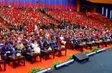
Vietnam advocates for multilateralism & trust | Global Insights
Politics & Economy 16:25At the 81st UN General Assembly in New York, Party General Secretary and President To Lam delivered a pivotal address emphasizing peace, international law, and multilateral cooperation. Reaffirming Vietnam's role as a trusted partner to rebuild trust and prevent economic and technological divisions.

The Race for Critical Minerals | Global Insight
Politics & Economy 16:12Critical minerals like lithium and rare earths are driving advanced technology and shaping modern geopolitical competition. Discover how global powers are racing to control supply chains and processing capabilities. This episode also explores Vietnam's strategy to leverage its mineral reserves to advance in the global technology value chain.

G20 at a crossroads | Global Insight
Politics & Economy 13:38The world’s biggest economies are facing a familiar challenge - but with increasingly different answers. From global debt and trade imbalances to the race for artificial intelligence, growing divisions are testing the G20’s ability to forge common ground. As the United States takes the helm, can the G20 still deliver collective solutions in an increasingly fragmented world? And what will its shifting priorities mean for the global economy?

The Rise of Middle Powers | Global Insight
Politics & Economy 12:00Amidst the escalating rivalry between Washington and Beijing, middle powers are increasingly refusing to choose sides and are instead asserting their strategic autonomy. By leveraging flexible partnerships and hedging strategies, these nations are safeguarding critical supply chains whilst actively shaping a more multipolar global order.
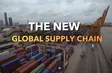
The New Global Supply Chain | Global Insight
Politics & Economy 18:38Geopolitical tensions, trade restrictions, conflicts and disruptions to critical resources are reshaping how goods move across borders. This episode of Global Insight explores whether we are witnessing the end of globalization or the emergence of a new global supply chain built around resilience, diversification and strategic connectivity.
Mecca Defence Pact | Global Insight
Politics & Economy 22:06An attack on one will be considered an attack on all. The defining principle behind NATO's Article 5 has found a new home.
Europe's Migration Crisis | Global Insight
Politics & Economy 16:33As irregular arrivals surge at critical gateways like the Spanish enclave of Ceuta, European governments face mounting political and operational pressure. This episode of Global Insight examines the deepening tension between hardline border containment and collective European solidarity.
Contact us
+(84)24.6327.1999 | Fax: +(84)24.3771.8838
vietnamtoday@vtv.vn
43 Nguyen Chi Thanh Street, Giang Vo, Hanoi, Vietnam
About us
Connect with us


