

Dark mode

Việt Nam develops UAV talent for future industries
Việt Nam is accelerating a national strategy to develop unmanned aerial vehicles (UAVs) as a cornerstone of its emerging low-altitude economy, in line with Resolution 57 on science and technology development, innovation, and national digital transformation. In 2025, Việt Nam's low-altitude economy was estimated to be worth around 100 million USD, growing to reach 2–3 billion USD by 2030, and creating around one million jobs by 2035.

Czech Vietnamese boost Vietnamese goods
Economy 03:39From small Vietnamese-owned stores established more than three decades ago, the Vietnamese community in the Czech Republic has built an extensive business and distribution network. With thousands of enterprises operating across the country and several major shopping centres owned by Vietnamese entrepreneurs, the community has become an important bridge connecting Vietnamese products with European consumers.
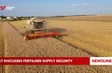
G7 discusses fertiliser supply security
Economy 02:10G7 agriculture ministers met in France on 8 June to discuss fertiliser supply security, amidst renewed volatility in the global fertiliser market. The meeting is seen as an effort by developed economies to reduce pressure on agricultural production and stabilise food supplies.

Strengthening environmental governance for blue economy
Economy 03:12To combat massive potential GDP losses from climate change and air pollution, Việt Nam is urgently updating its environmental policies. With 62% of localities now coastal, experts emphasised the importance of community-led marine conservation, integrated digital databases, and balancing economic growth with biodiversity protection for a sustainable blue economy.

Việt Nam develops UAV talent for future industries
Economy 02:57Việt Nam is accelerating a national strategy to develop unmanned aerial vehicles (UAVs) as a cornerstone of its emerging low-altitude economy, in line with Resolution 57 on science and technology development, innovation, and national digital transformation. In 2025, Việt Nam's low-altitude economy was estimated to be worth around 100 million USD, growing to reach 2–3 billion USD by 2030, and creating around one million jobs by 2035.

International trade fair opens in An Giang
Economy 00:41The 2026 Tịnh Biên – An Giang International Trade Fair has officially opened in An Giang Province, bringing together hundreds of businesses from Việt Nam, Cambodia, Laos and Thailand. With around 260 booths, the event showcases agricultural products, seafood, consumer goods, OCOP products and regional specialities. The fair also offers opportunities for businesses to expand markets and strengthen trade links.

The rise of private labels in retail
Economy 03:16Private label products have been present in Việt Nam's retail market for years, often positioned as lower-cost alternatives to established brands. However, private labels are now no longer just about cheaper prices. They are becoming a key part of retailers' growth strategies, competing more on value and expanding into a wider range of product categories, while giving retailers a new way to build loyalty, improve margins, and shape shopping habits.
Contact us
+(84)24.6327.1999 | Fax: +(84)24.3771.8838
vietnamtoday@vtv.vn
43 Nguyen Chi Thanh Street, Giang Vo, Hanoi, Vietnam
About us
Connect with us


